
The world of sports has always thrived on emotion — the tension of a penalty kick, the roar of the crowd, the electric rush of a buzzer-beater. But in recent years, technology has been quietly reshaping the entire experience, not just for athletes but also for fans, coaches, and even stadium architects. From wearables that monitor every heartbeat to stadiums that think like smart cities, sports have entered an era where data, design, and digital intelligence are rewriting what it means to play and to watch.
The Athlete’s Revolution: Data as the New Coach
The evolution began with the athlete. Today, elite performers no longer train by instinct alone — they are guided by streams of real-time data from wearable sensors embedded in their clothing, shoes, or even mouthguards. These devices track everything from heart rate variability to acceleration, sleep cycles, and oxygen levels.
In football, GPS vests have become standard equipment during training sessions, helping coaches quantify workloads and reduce the risk of injury. In tennis, smart rackets capture swing speed and ball impact data, allowing players to adjust their technique with precision. Even in marathon running, carbon-plated shoes integrated with pressure sensors provide feedback on gait efficiency and muscle fatigue.
The rise of wearables has democratized high-performance insight. What was once the domain of Olympic-level analytics now reaches weekend runners and amateur athletes through consumer devices like Garmin, WHOOP, and Apple Watch. The line between professional and personal fitness continues to blur, as millions of users engage with their data to improve not only performance but also long-term health.
Yet, beyond the numbers, wearables have introduced something deeper: a new form of body awareness. Athletes are learning to “listen” to their physiological signals with more nuance, blending technology with intuition. The best teams aren’t just data-driven — they’re data-informed.
Smarter Arenas: Stadiums as Living Systems
If wearables bring intelligence to the body, then smart stadiums bring it to the environment. The next generation of sports venues are being designed as living, learning ecosystems — digitally connected, energy-efficient, and deeply interactive.
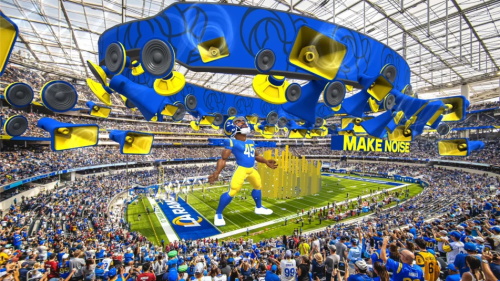
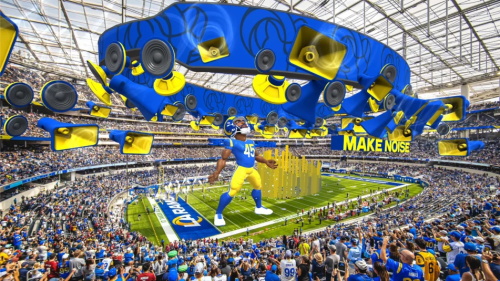
Consider Tottenham Hotspur Stadium in London, where facial recognition speeds up security checks, mobile apps guide fans to their seats, and the entire venue runs on real-time crowd flow analytics. Or SoFi Stadium in Los Angeles, a technological marvel that uses AI-driven monitoring to optimize air circulation, lighting, and even concession lines.
Smart stadiums are no longer just physical structures; they are data platforms. Sensors monitor temperature, foot traffic, and noise levels, while massive LED displays and AR-enabled experiences allow fans to see live statistics, player biometrics, and instant replays from multiple camera angles.
For sustainability, many venues are embracing green tech. Amsterdam’s Johan Cruyff Arena runs partly on renewable energy and repurposed EV batteries, while Qatar’s 2022 World Cup stadiums were designed with advanced cooling systems to reduce environmental impact.
All this innovation transforms the simple act of “going to a game” into a multi-sensory experience — immersive, efficient, and deeply personalized. Fans can pre-order snacks via an app, get AI-generated seat recommendations for the best view, or even engage in interactive prediction games synced to the live match.

AR, VR, and the New Spectator Dimension
For those watching from home, the revolution is equally profound. Virtual reality (VR) and augmented reality (AR) are breaking down the barriers between spectator and spectacle. With Meta’s immersive sports broadcasts or Apple’s Vision Pro experiences, fans can now “sit courtside” from their living room, switching camera perspectives at will.
This evolution has major implications for sports broadcasting. Instead of being passive viewers, audiences become active participants, curating their own angles, commentary, and data overlays. AR graphics that once appeared only on televised football matches — like the offside line or shot trajectory — are now integrated into mobile and headset experiences, creating a hybrid reality where live and digital co-exist.
E-sports, naturally, have led this movement, pioneering interactive viewing platforms that traditional sports are now adopting. The NBA, Formula 1, and Premier League are experimenting with metaverse arenas where global fans gather as avatars to watch, chat, and even buy virtual merchandise in real time.
Coaching in the Cloud: AI and Predictive Analytics
Technology’s reach extends beyond athletes and fans — it’s also revolutionizing how teams strategize. Artificial intelligence and machine learning are now central to coaching and talent management.
In baseball, AI models analyze pitch sequences to predict batter tendencies. In basketball, camera systems track every player movement, generating heat maps that help coaches refine defensive rotations. Even recruitment is being reshaped, as algorithms identify undervalued players by analyzing biomechanics and decision-making speed rather than just raw stats.
What’s emerging is a new balance between instinct and information. The coach’s intuition remains vital, but now it’s amplified by tools that process millions of data points in seconds. In a sense, AI is becoming the invisible assistant — not replacing human judgment, but sharpening it.
Ethics, Privacy, and the Human Core
Of course, with great data comes great responsibility. The flood of biometric and behavioral information raises new ethical questions. Who owns an athlete’s data — the team, the sponsor, or the athlete themselves? How can fan tracking systems respect privacy while enhancing convenience?
Sports organizations are beginning to develop digital ethics policies, ensuring that technology enhances rather than exploits human experience. Because ultimately, sport’s power lies not in algorithms, but in emotion — the joy, pain, and unity it evokes.
The Future: A Connected, Conscious Arena
Looking ahead, the fusion of technology and sport will only deepen. Expect AI referees with zero bias, 5G-enabled instant replay from any seat, and “digital twins” of stadiums that allow remote maintenance and design updates in real time.
But the most exciting development might be philosophical: a shift from “technology for performance” to technology for connection. Wearables, smart stadiums, and immersive media are not just making sport smarter — they’re making it more human-centered.
The stadium of the future won’t just be smart — it will be aware: of its fans, its impact, and the stories it helps create. And in that fusion of data and drama, sport will continue to be what it has always been — a mirror of our most advanced technologies, and our most timeless passions.
Recommend:

Athlete as CEO: Cristiano Ronaldo’s Playbook for Self-Sustaining Success

The Sky’s the Limit: Duplantis’s Journey from Athletic Success to Global Branding

Bernabéu Bound: How Vinícius Júnior Represents a Generation of Brazilian Talent
From Wearables to Smart Stadiums: Technology That’s Redefining the Sports Experience