
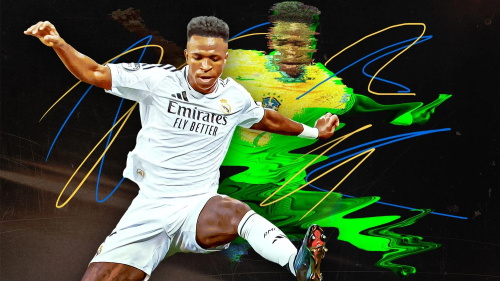
When Vinícius Júnior sprinted down the left wing at the Santiago Bernabéu for the first time, many saw more than just another prodigy in a white Real Madrid jersey. They saw a symbol — a bridge between Brazil’s raw street football spirit and Europe’s tactical, polished dominance. Today, Vinícius is not merely a key figure in Real Madrid’s attack; he embodies a new generation of Brazilian talent that has redefined what it means to “make it” abroad.
From São Gonçalo, a working-class suburb of Rio de Janeiro, to the grand lights of Madrid, Vinícius’s story is one of courage and cultural transformation. His journey represents a recurring Brazilian dream — to leave behind local futsal courts and dusty pitches for the pristine stadiums of Europe. But unlike many who came before him, Vinícius has become more than a symbol of potential; he has become a blueprint for how the new Brazilian generation adapts, perseveres, and thrives on a global stage that demands both flair and discipline.
A New Type of Brazilian Export
Brazil has always been a football factory. From Pelé to Neymar, the country has produced icons who transformed how the world views the sport. But Vinícius Júnior’s rise coincides with a new era in football globalization. European clubs now recruit younger than ever, often before a player’s 18th birthday, bringing them into elite academies where every touch is analyzed, and every move is monetized.
When Real Madrid signed Vinícius from Flamengo in 2017 for a staggering €45 million — before he had even turned 18 — skeptics called it reckless. Yet, this transfer marked the start of a trend: clubs betting on teenage Brazilians as both long-term investments and future global stars. Rodrygo, Endrick, and even earlier cases like Gabriel Jesus all followed similar paths, but Vinícius became the prototype that justified the risk.
His early struggles in Madrid reflected the gap between Brazilian football’s improvisation and European precision. Critics mocked his finishing and decision-making, yet beneath the criticism was the same misunderstanding that faced Ronaldinho or Neymar early on: Brazilian footballers don’t simply “learn” systems — they learn to *adapt* to them without losing their instinctive creativity. Vinícius’s transformation under coaches like Carlo Ancelotti shows just that.
The Psychology of Maturity
Vinícius’s maturity did not come easily. His first two seasons were marked by self-doubt, missed chances, and media scrutiny. Spanish tabloids dissected every misstep. Yet, what defines this new generation of Brazilian players is mental resilience — a recognition that talent alone doesn’t guarantee survival in European football.
Mentorship played a key role. Karim Benzema, famously caught once saying Vinícius was “playing against us,” later became one of his biggest supporters. Under Ancelotti’s guidance, Vinícius learned not just how to finish but how to read games, manage pressure, and channel aggression into focus. By the 2021–2022 season, he had become one of the most decisive players in Europe, scoring in the Champions League final and earning global respect.
His evolution mirrors the emotional journey of many young Brazilians who leave home too early — learning a new language, culture, and playing philosophy while carrying the weight of a nation’s expectations. For Vinícius, each goal is not just a career achievement; it’s a validation of that resilience.

The Cultural Shift: From Samba to System
What makes Vinícius truly emblematic of his generation is the balance he strikes between showmanship and structure. He plays with the confidence of a favela-born street footballer, yet his positional discipline and tactical awareness reveal a European refinement.
This synthesis reflects a broader shift in Brazilian football. The myth of the “carefree samba player” has evolved into something more complex. Brazilian academies now integrate sports psychology, nutrition, and data analytics, preparing players for the demands of European leagues. The result? Players who still dance with the ball but also understand when not to.
Vinícius represents this dual identity perfectly. His signature moves — the explosive acceleration, the fearless dribbles, the celebratory dances — are pure Brazil. But his consistency, defensive work rate, and professionalism reflect a player forged in Madrid’s unforgiving culture. He bridges two footballing worlds without losing authenticity.
Facing Racism and Redefining Leadership
Perhaps Vinícius’s most defining chapter is his stand against racism in Spanish football. Throughout 2023, he faced repeated racial abuse from opposing fans, yet his refusal to stay silent turned him from an athlete into an activist. His emotional speeches, social media statements, and pressure on institutions like La Liga and FIFA forced the global football community to confront uncomfortable truths.
This leadership marks another generational evolution. Older players often endured racism quietly; Vinícius and his peers demand accountability. In doing so, he has become a voice not only for Brazilians but for all Black athletes navigating European football. His courage to speak out — while maintaining world-class performance levels — reshapes what it means to be a modern sports role model.
The Future of Brazilian Football in Europe
Vinícius’s success at the Bernabéu has paved the way for others. Real Madrid’s investment in Endrick, another teenage sensation from Palmeiras, shows how clubs now see Brazilian players not just as entertainers but as cornerstones of long-term strategy. These signings aren’t nostalgia for samba — they’re strategic moves for the future.
For young Brazilians watching Vinícius’s journey, the message is clear: talent must travel, but identity must stay. Whether it’s Rodrygo, Gabriel Martinelli, or newcomers like Savinho, this generation carries a shared ethos — to globalize Brazilian football without diluting its essence.
Conclusion
“Bernabéu Bound” is more than a career trajectory; it’s a metaphor for a generation crossing borders — physically, culturally, and psychologically. Vinícius Júnior is no longer just the boy from São Gonçalo who dreamed of Europe. He is the face of modern Brazilian football: proud, polished, and powerful.
In every sprint, celebration, and stand against injustice, Vinícius doesn’t just represent Real Madrid — he represents a Brazil that continues to evolve, one generation at a time.
Recommend:
Speaking the Game: How Retired Athletes Find Fame as Commentators

Family, Coaches, and Self-Doubt: Inside the Mind of a Champion

Gold, Glory, and Global Recognition: The Olympic Fame Effect
Racing in Real and Virtual Worlds: Lando Norris’s Dual Career