
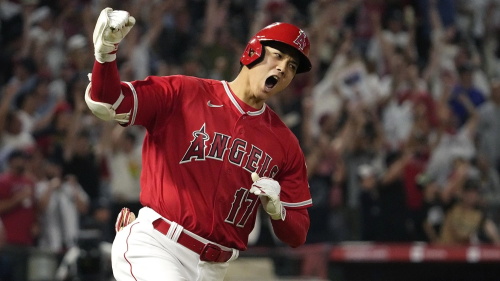
In the modern world of professional sports, being “two-way” is almost synonymous with “impossible.” For decades, baseball has divided its heroes neatly: pitchers pitch, hitters hit. Then came Shohei Ohtani, a once-in-a-century player who not only shattered that division but also redefined what it means to be valuable — both on the field and in the marketplace.
Ohtani is not just changing how baseball is played; he’s transforming how athletes are valued, marketed, and even paid. His story isn’t just athletic — it’s economic, cultural, and global.
1. Rarity as a Market Force
Scarcity creates value. That’s the first rule of economics — and Ohtani embodies it perfectly. As both an elite pitcher and a top-tier hitter, he has created a new category of athlete.
For the Los Angeles Dodgers, his dual-threat talent means he contributes on both sides of the game: he can dominate a lineup from the mound one night and then hit home runs as the designated hitter the next. This is something no one else in modern baseball does at his level.
That uniqueness is a marketing goldmine. Teams pay for wins, but brands pay for stories — and Ohtani’s story is unlike anyone else’s. ESPN once calculated that even if Ohtani were “only” a hitter or “only” a pitcher, he’d still command a nine-figure deal. Doing both makes him priceless.
In the age of data and performance metrics, Ohtani’s existence adds a human variable that money can’t easily measure: awe. And awe, as brands know, sells.
2. The $700 Million Contract That Changed Everything
When Ohtani signed with the Dodgers in December 2023 for 10 years and $700 million, headlines around the world called it the biggest deal in sports history. But the real story lies in how that contract was structured — and what it represents about a changing athlete economy.
Only about $2 million of that annual salary is paid up front. The remaining $68 million per year is deferred — spread out from 2034 to 2043. From a financial perspective, that means the present value of the contract is significantly lower than $700 million. Yet Ohtani accepted it willingly. Why?
Because he doesn’t need the cash flow now. Ohtani’s endorsement income already exceeds $50 million per year, according to Forbes — far surpassing any other baseball player. By deferring his salary, he helps the Dodgers stay under payroll tax thresholds, allowing them to build a stronger team around him.
It’s a rare win-win: Ohtani secures long-term financial stability, and the Dodgers gain short-term flexibility. But symbolically, it’s even more significant. The deal reflects a new model where athletes act as investors and brand CEOs, not just employees cashing a paycheck.
3. Beyond the Field: The Brand, the Business, the Global Reach
Shohei Ohtani is more than a player — he’s a global phenomenon. His commercial influence stretches from Tokyo to Los Angeles to Seoul, and beyond.
- Endorsements: Ohtani represents global brands such as New Balance, Seiko, Oakley, and Topps. In Japan, his image appears on billboards, beverages, and even credit cards.
- Cultural symbolism: To Japanese audiences, he’s a national treasure — polite, disciplined, humble. To American fans, he’s a reminder that baseball can still produce miracles.
- Economic ripple effect: When Ohtani joined the Dodgers, ticket prices for opening games jumped nearly 50%. Dodgers merchandise sales hit record highs. Japanese broadcasters paid millions more for broadcast rights.
Ohtani doesn’t just generate revenue — he multiplies it across industries. Economists call this the “Ohtani Effect”: a single player whose brand impact is felt by sponsors, cities, and entire leagues.
And it’s not just about the money. It’s about representation. Ohtani bridges two sports cultures — Japan’s precision and America’s spectacle — in a way that humanizes globalization. He’s fluent in both humility and heroism.
4. Lessons for Modern Athlete Valuation
Ohtani’s rise redefines how we think about an athlete’s market value. A few key insights stand out:
(1) Uniqueness drives exponential value.
By excelling in two roles, Ohtani demonstrates that mastering multiple skills in one body can multiply worth — not add it. Future athletes might not all pitch and hit, but they might blend roles: defense and offense, sport and entertainment, competition and content.
(2) Commercial power now equals performance power.
Teams no longer value athletes solely for their on-field production. Ohtani’s brand reach, global fandom, and media appeal are part of the Dodgers’ valuation. For athletes, this means that personal branding, authenticity, and narrative are now assets in contract negotiations.
(3) Financial structure is the new frontier.
Ohtani’s deferred deal demonstrates financial sophistication. As sports teams face luxury taxes and salary caps, creative structuring will become more common. Players with business acumen — or advisors who think like investors — will gain leverage.
(4) High reward comes with high risk.
Ohtani’s pitching arm has faced multiple injuries, including UCL tears. If his pitching career ever diminishes, the “two-way” appeal could fade. Yet even then, his market power as a hitter and icon remains strong. This duality shows that modern athlete value includes resilience — the ability to pivot, rebrand, and remain relevant.
5. The Future of Contracts, Teams, and Global Sports
Ohtani’s example will ripple far beyond baseball. His influence is already visible in several areas:
- Contract negotiations: Future stars — in baseball, basketball, or football — will use Ohtani’s structure as precedent. They’ll argue for flexibility, creative payment terms, and recognition of off-field commercial power.
- Team strategy: To attract transcendent talent, franchises must offer more than money. They must provide media infrastructure, international outreach, and brand synergy. The Dodgers didn’t just buy a player — they acquired a global marketing engine.
- Sports as global entertainment: Ohtani blurs the line between athlete and global entertainer. His quiet charisma, multilingual fan base, and “superhuman yet humble” persona embody what modern sports consumers crave — inspiration across borders.
6. The Ohtani Legacy
What Shohei Ohtani has achieved is larger than baseball. He has become the prototype of the 21st-century athlete — multidimensional, globally marketable, and financially strategic.
He’s also rewritten the value equation:
> Performance + Personality + Global Reach = Market Power.
Ohtani’s story proves that greatness today isn’t just measured in stats or championships. It’s measured in influence, creativity, and the ability to merge athletic and cultural capital.
He’s not just a player. He’s a brand architect, a cultural ambassador, and a visionary who challenges how we define worth in sports.
And perhaps the most telling part? Despite all the fame, he remains reserved, disciplined, and team-oriented — the very traits that make him universally admired.
Recommend:

The Sky’s the Limit: Duplantis’s Journey from Athletic Success to Global Branding

The Star Effect: Mikaela Shiffrin’s Role in Popularizing Competitive Skiing
The Greek Freak’s Journey: From Refugee Kid to NBA Legend

Family, Coaches, and Self-Doubt: Inside the Mind of a Champion