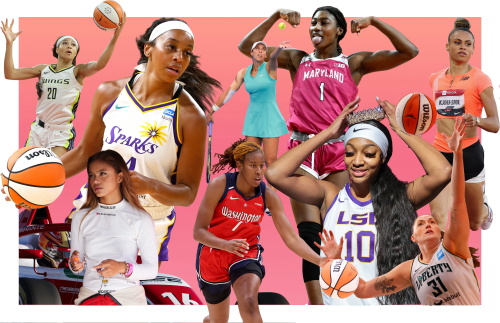
On a sunlit tennis court in New York, Naomi Osaka wipes the sweat from her brow, her face a mask of focus and determination. The crowd cheers, cameras flash, and a commentator remarks, “She looks poised, elegant out there.” Osaka’s fists pump in triumph after a powerful serve, yet the compliment lingers—one rarely directed at male athletes. For female athletes like her, success is never just about skill. It is a delicate, often invisible balancing act between athletic excellence, societal beauty standards, and the biases that quietly dictate public perception.
This dual expectation begins early. Gymnast Quan Hongchan, who stunned the world at the Tokyo Olympics with flawless dives at just 14, experienced it firsthand. Headlines praised her “cute and youthful” appearance alongside her perfect technique. Though such descriptions may seem harmless, they underscore a persistent narrative: a female athlete’s body and image are constantly under scrutiny, sometimes more than her achievements. This contrasts sharply with male athletes, whose bodies are often valued only for strength, endurance, or performance, not “appeal.”
The pressure extends far beyond media commentary. Sponsorships and endorsements frequently hinge on how an athlete’s appearance aligns with brand ideals. Swimmer Katie Ledecky, despite her record-breaking dominance, navigates a world where public image must marry athleticism and marketability. Male athletes, in contrast, are seldom judged by aesthetics—LeBron James or Lionel Messi are celebrated first and foremost for their prowess. For women, being exceptional is rarely sufficient; the question of how they look while excelling often remains unspoken but ever-present.
Social media intensifies these pressures. Platforms like Instagram allow athletes to build personal brands, but also magnify scrutiny. Every hairstyle, outfit, or facial expression becomes fodder for public opinion. Gymnast Simone Biles has spoken about the exhausting nature of online commentary that fixates on appearance rather than groundbreaking achievements. In the digital age, visibility is a double-edged sword: it provides opportunities for connection and advocacy but also magnifies judgment.
Yet, some athletes are rewriting the narrative. Tennis star Iga Świątek, a psychology major, openly addresses mental health while focusing attention on the intellect, strategy, and emotional discipline that define her game. Soccer superstar Alex Morgan champions equal pay and gender equity while maintaining her individuality, proving that female athletes can assert authority over their image without sacrificing athletic credibility. These women demonstrate that skill and self-expression can coexist, challenging outdated notions of what a female athlete should look like or how she should behave.
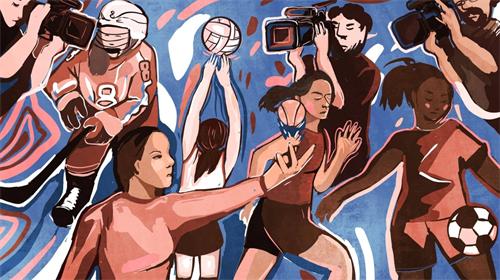
The impact of these pressures is not just social but structural. Female athletes continue to face disparities in media coverage, salary, and sponsorship opportunities. The 2023 Women’s World Cup highlighted this contrast: despite record-breaking viewership and performance, coverage of female players remains uneven compared to men’s tournaments, and prize money lags behind. Even at the highest level, female athletes must navigate an environment where recognition often comes with strings attached—strings tied to appearance, demeanor, and public perception.
This burden also affects mental and physical well-being. Eating disorders, anxiety, and burnout are more common among women in sports, fueled by the expectation to maintain a certain image alongside peak performance. The subtle, persistent emphasis on appearance reinforces a culture in which athletic talent alone is insufficient for acclaim or opportunity.
Changing this culture requires conscious effort from fans, media, and institutions. Celebrating athletes for skill, dedication, and resilience—rather than aesthetics—can reshape public perception. Highlighting diverse body types, personalities, and styles allows female athletes to excel without compromising authenticity. Media coverage should prioritize performance and achievements, endorsements should reward talent, and audiences should recognize that beauty is not the currency of success in sports.
For the next generation of young girls, these shifts matter profoundly. They should be inspired to dream of athletic excellence without worrying that their bodies or appearance will be scrutinized more than their performance. Female athletes’ triumphs deserve recognition for what they are: testaments to skill, perseverance, and discipline. Medals, records, and achievements—not the judgment of the public gaze—should define their legacy.
Back on that New York tennis court, Osaka raises her trophy, the crowd roaring. Her victory is not just a win on the scoreboard; it is a quiet rebellion against the invisible burdens that have followed her—and countless female athletes—through every match. It is a reminder that the true measure of an athlete, regardless of gender, is talent, courage, and dedication. And perhaps, slowly, the sports world is learning to see female athletes for exactly that.
Recommend:
Bernabéu Bound: How Vinícius Júnior Represents a Generation of Brazilian Talent

Athlete as CEO: Cristiano Ronaldo’s Playbook for Self-Sustaining Success

Nike vs. Adidas: Who’s Winning the New Era of Athlete Collaborations?

The Psychology of Victory: How Świątek Beats Stress with Science