

We’re living in an era where winning margins are measured in heartbeats, millimetres and milliseconds. Elite sport has always been a numbers game, but the arrival of advanced analytics and AI has changed the scale and speed at which those numbers are turned into decisions. From wearable sensors that whisper fatigue signals to machine-learning models that predict injury risk, the science of performance is entering a new, noisy — and enormously promising — phase.
More signal, less guesswork
At its best, data reduces guesswork. Coaches used to rely on eye tests, instinct and the occasional gut call. Today, data provides a continuous, objective feed: GPS traces of sprint profiles, inertial-measurement-unit outputs mapping joint angles, force-plate data for jump mechanics, and even biochemical markers captured through finger-prick tests. AI can fuse these diverse streams, spotting patterns no human could reliably detect in real time.
That’s not to say analytics replace coaching judgement — they enhance it. A savvy coach still interprets numbers within context: the athlete’s psychology, the season’s phase, and the idiosyncrasies that make each human unique. The best outcomes come when data and expertise form a feedback loop: algorithms propose, humans test, and both learn.
Personalization at scale
Historically, “elite” preparation meant following a program that worked for the majority. New tools let teams personalize training down to the individual: dose workloads to an athlete’s recovery profile, tailor nutrition to genetic tendencies, and even adjust tactical burdens to cognitive load measurements. Personalization isn’t just a performance lever — it’s an equity one. Athletes who previously sat on the margins can now be developed with precision plans that account for their physiology and life context.
AI helps by compressing complex multi-dimensional data into actionable recommendations. Instead of a dozen spreadsheets, a coach receives prioritized interventions: reduce sprint load this week, add eccentric hamstring work, adjust sleep hygiene. This clarity matters in the noisy, fast-moving environment of professional sport.
Injury prevention: prediction versus prevention
Arguably the most attractive promise of analytics is preventing injuries. Predictive models aim to identify athletes at elevated risk and prompt pre-emptive action. But there’s an important nuance: predicting an injury is not the same as preventing it. Models can flag probabilities, but translating that into prevention requires structural changes — schedule adjustments, load management, and athlete buy-in.
There’s also the danger of overreliance. False positives can bench healthy players or trigger unnecessary interventions; false negatives can lull staff into complacency. The responsible use of predictive analytics needs transparency about uncertainty and a willingness to integrate model outputs with human oversight.
Talent identification: a double-edged sword
AI-powered scouting is reshaping how talent is spotted. Algorithms can surface players who excel in specific metrics or whose developmental paths mirror successful predecessors. This widens the searchlight beyond traditional scouting networks, potentially unearthing overlooked talent.
Yet data-driven scouting can reinforce bias if not carefully designed. If models are trained on past data that overrepresents certain demographics, playing styles or body types, they can reproduce those preferences and narrow — rather than broaden — opportunity. Smart organizations pair algorithmic picks with diverse human perspectives to avoid a homogenized pipeline.
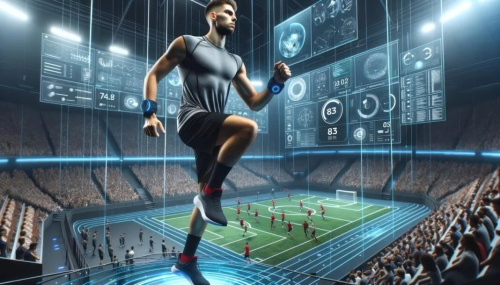
Tactical insights and in-game decisioning
The tactical layer is where analytics go public: expected-goals maps in football, pitch-tracking in baseball, opponent-read models in basketball — all provide an edge. Real-time analytics can inform substitutions, matchups, and risk assessments; coaches can simulate scenarios and weigh trade-offs quickly.
But decision latency and information overload are genuine risks. Giving a coach too many options, too quickly, can paralyze decision-making. The goal is not to flood practitioners with data, but to surface the few variables that change the decision calculus in a match.
Ethical considerations and athlete agency
As performance data grows deeper — encompassing biometrics, sleep metrics, hormonal profiles — privacy becomes a central concern. Who owns an athlete’s physiological data? How is it used after their contract ends? There’s also the spectre of coercion: athletes may feel pressured to surrender intimate data to remain competitive.
Ethical frameworks must prioritize informed consent, data minimization, and clear governance. Athletes should be partners in the data process, understanding what is collected, why, and how decisions will be made using their information.
The human factor still wins
For all the algorithmic fireworks, sport remains inherently human. Motivation, creativity under pressure, resilience and the ability to execute in chaotic moments are not linearly reducible to variables. Analytics should therefore be seen as an amplifier — a tool that sharpens human judgment rather than displaces it.
Teams that blend rigorous data science with cultural intelligence — clear communication, trust-building and respect for athlete autonomy — will extract the most value. AI may tell you who is likely to underperform under a certain load, but it won’t lace the shoes or calm the nerves before a penalty kick.
Pragmatic optimism
The arrival of AI and sophisticated analytics is neither a utopia nor a threat; it’s a set of capabilities whose value depends on how they’re used. Thoughtful organizations will focus on interpretability, ethical stewardship, and the human-data partnership. They’ll invest as much in data literacy and culture as in sensors and models.
In elite sport, the margins are tiny and the stakes high. When used responsibly, analytics don’t promise to make miracles — they promise to nudge the margins in favor of better preparation, smarter decisions and longer careers. Sport has always been a contest of adaptation; now, teams that adapt intelligently to the age of data will write the next chapters of sporting excellence.
Recommend:

Athlete as CEO: Cristiano Ronaldo’s Playbook for Self-Sustaining Success

The Limits of Discipline: How Athletes Thrive Under Pressure
From Wearables to Smart Stadiums: Technology That’s Redefining the Sports Experience
Boxing Star, Luxury Icon: The Canelo Álvarez Crossover Story