
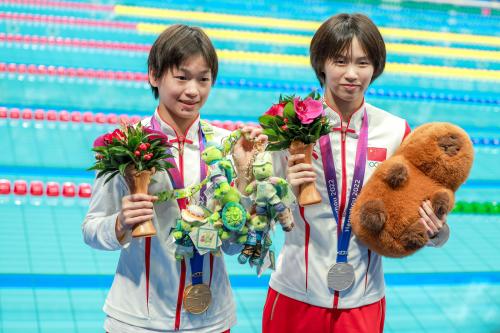
When we watch Chinese divers glide effortlessly through the air, twisting and turning with perfect precision, it’s easy to see only the result: gold medals, flawless routines, and the quiet dignity of champions on the podium. Yet behind every seemingly effortless dive is a story of relentless dedication, early talent identification, and a unique cultural and institutional ecosystem that shapes these young athletes from childhood into global icons. China’s diving prodigies are not born overnight—they are the product of an intricate and often intense system that blends talent, rigorous training, and early-life experiences.
The Making of a Prodigy
Chinese diving is legendary, in no small part due to the country’s meticulous approach to scouting and developing young talent. Many elite divers are discovered at remarkably young ages, sometimes as young as four or five. Talent scouts often visit schools and sports clubs, looking for children who demonstrate natural athletic abilities: flexibility, balance, spatial awareness, and even the psychological traits of composure and determination. These early indicators often predict the potential for success on the world stage.
But talent alone is never enough. Once identified, children enter a structured training regimen that is both demanding and comprehensive. Physical conditioning begins with basic gymnastics, tumbling, and swimming, then transitions into diving-specific techniques, focusing on approach, takeoff, aerial maneuvers, and entry. The progression is rapid: by the age of eight or nine, many young divers are already performing complex dives that would challenge amateur athletes twice their age.
Discipline, Sacrifice, and the Daily Grind
The life of a Chinese diving prodigy is characterized by discipline rarely seen in other countries. Training often starts early in the morning and continues through the afternoon, interspersed with academic lessons. It is not uncommon for children to spend six to eight hours a day in training, developing both physical strength and mental resilience. While this intense schedule can be grueling, coaches emphasize precision, repetition, and attention to detail, instilling habits that will define these athletes throughout their careers.
Family support is another crucial factor. Many parents make significant sacrifices, relocating their children to specialized sports schools or providing financial and emotional support for their training. The story of Quan Hongchan, the teenage diving sensation who won Olympic gold at just 14, highlights this dynamic. Quan grew up in a small village in Guangdong province, and her family’s dedication was instrumental in her rise. Her father often worked multiple jobs to support her training, illustrating the blend of personal sacrifice and national aspiration that fuels China’s diving machine.
The Role of Coaches and Mentorship
Chinese diving coaches are revered not only for their technical expertise but for their role as mentors and psychologists. These coaches are tasked with shaping young athletes into champions while managing the intense pressures of international competition. A coach’s guidance is often holistic: they oversee physical training, mental conditioning, and even social development. The bond between coach and athlete is intense and personal; many divers credit their coaches not just for teaching technique, but for nurturing their confidence, resilience, and love for the sport.
Take the case of Chen Ruolin, a multiple Olympic champion, whose coach guided her through injuries and competition setbacks, shaping not only her diving technique but also her mental approach to challenges. Stories like Chen’s highlight that success in diving is as much about psychological readiness as it is about physical skill.
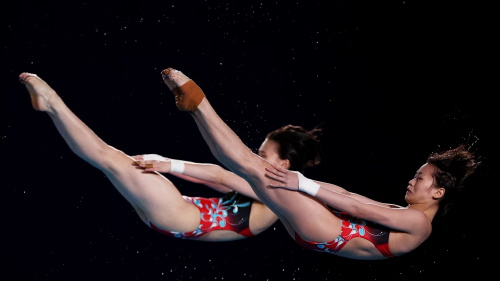
Childhood Experiences: The Double-Edged Sword
While the system produces extraordinary talent, it comes with trade-offs. Childhoods of diving prodigies are often highly regimented, leaving little room for the typical experiences of play, social exploration, or casual learning. The intense focus on athletic excellence can be isolating; young athletes may spend more time with coaches and teammates than with family or friends. Yet many divers, when reflecting on their careers, recognize that the sacrifices were necessary for achieving excellence.
Interestingly, these early experiences often cultivate traits beyond diving itself. Discipline, goal-setting, and resilience are transferable skills that serve divers well in life beyond sport. For instance, many former divers have transitioned into coaching, sports administration, or motivational speaking, leveraging the lessons learned in rigorous training environments.
Balancing National Pride and Individual Aspiration
China’s diving system is intertwined with national identity and pride. Success on the international stage is viewed as a reflection of the nation’s prowess, and athletes often carry immense expectations. For young divers, this dual pressure—personal aspiration and national representation—shapes their worldview and work ethic. It is both a motivator and a challenge, requiring mental strength from an early age.
Yet, despite the pressure, there is joy in mastery. Watching children leap from platforms, perform twists and somersaults, and execute perfect entries into the water, one sees glimpses of pure exhilaration, the kind that first drew them to the sport. In this balance between discipline and passion, China’s diving prodigies find both challenge and fulfillment.
The Next Generation
As China continues to dominate the global diving stage, the system of identifying and nurturing talent shows no signs of slowing. With increasing attention to sports science, psychology, and injury prevention, the next generation of divers may benefit from more sophisticated training while retaining the foundational values of discipline and dedication.
Ultimately, the stories behind China’s diving prodigies remind us that greatness is never accidental. It is sculpted over years of careful observation, relentless practice, and unwavering support from coaches, families, and communities. Behind every gold medal lies a childhood defined by structure, sacrifice, and a singular focus on excellence—a testament to the enduring power of talent nurtured with intention.
Recommend:
Racing in Real and Virtual Worlds: Lando Norris’s Dual Career

Rituals, Heroes, and Stories: The Cultural Language of Sport

Family, Coaches, and Self-Doubt: Inside the Mind of a Champion
Boxing Star, Luxury Icon: The Canelo Álvarez Crossover Story