

Sports broadcasting has always been about more than just showing the game—it’s about storytelling. From the slow-motion replay of a winning goal to the commentator’s emotional call, the broadcast experience shapes how fans remember sporting moments. Now, artificial intelligence (AI) is quietly transforming that storytelling, identifying highlights, analyzing player behavior, and even predicting momentum shifts. The new generation of “multi-modal” sports broadcasting—where video, audio, text, and sensor data converge—is redefining how both producers and audiences experience the game.
The Rise of Multi-Modal Data in Sports
Every major sport generates vast amounts of data, often in different forms. There’s visual data from cameras, auditory data from crowd noise and commentary, textual data from player statistics, and positional data from sensors or GPS trackers. Multi-modal AI systems integrate all these inputs simultaneously, creating a holistic view of the game that was impossible before.
For example, during a football match, AI can analyze the live video feed to track every player’s position, identify formations, and recognize gestures such as pointing or calling for the ball. Meanwhile, the system can correlate this with the sound of the crowd (cheering, gasping, or going silent) and the tone of commentators. When these signals converge—say, the crowd volume spikes, the ball is near the penalty area, and the commentator’s tone intensifies—AI recognizes a “key moment” is unfolding.
This combination of visual, auditory, and contextual understanding is what makes multi-modal AI so powerful. It doesn’t just see or hear the game—it interprets it.
From Human Curation to Automated Storytelling
Traditionally, the process of creating highlight reels or key moment recaps required teams of human editors. They would sift through hours of footage, selecting the decisive plays, emotional reactions, or controversial moments. Now, AI can perform that task in real time.
Companies like WSC Sports and IBM Watson have already built AI platforms capable of automatically generating highlights for major leagues such as the NBA, MLB, and La Liga. These systems detect high-value events by analyzing both the game data and the emotional context—such as the intensity of the crowd noise or the reaction of commentators. Within seconds, AI can produce short clips for social media or customized highlight packages for different audiences (for example, all the best goals by a specific player).
This automation isn’t replacing human storytelling; rather, it’s expanding it. Broadcasters can focus on creative narratives—post-match analysis, behind-the-scenes stories, and emotional interviews—while AI handles the repetitive and time-sensitive editing work.
AI and Emotion: Understanding the Crowd
One of the most interesting developments in AI sports broadcasting is emotion recognition. Crowd sounds, facial expressions, and even player body language can be analyzed to gauge the emotional temperature of the match.
Imagine an algorithm trained to understand the roar of 60,000 fans in a stadium. It can distinguish between a goal celebration, a collective groan after a missed chance, or the tension before a penalty. Combined with camera angles and real-time statistics, AI can determine not just what happened, but how it felt.
This emotional mapping could transform fan engagement. For example, an AI-driven broadcast platform might generate a “thrill map” of the match—showing when excitement peaked and why. Fans could relive the game’s emotional rhythm rather than just its scoreline.
The Multi-Screen Future: Personalization through AI
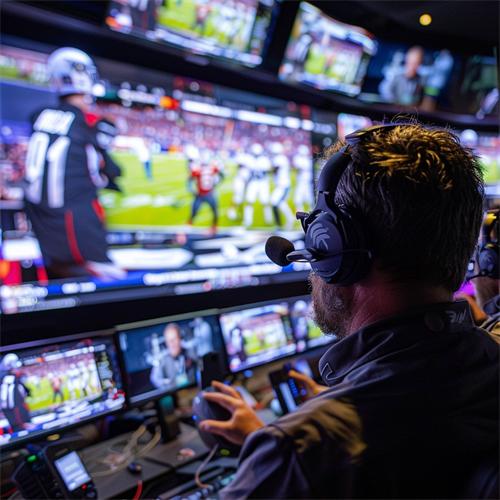
Modern sports fans are no longer limited to the TV screen. They’re watching on phones, tablets, and social platforms—often simultaneously. Multi-modal AI enables personalized, adaptive broadcasting that caters to this new consumption style.
A casual viewer might prefer a highlight reel of the most dramatic moments, while a tactical fan might want clips focusing on formation shifts or defensive strategies. AI can identify and assemble both automatically, using cues from the game data. Similarly, a commentator’s voice could be replaced or translated by AI into multiple languages in real time, while on-screen graphics adapt to each viewer’s preferences.
In essence, AI is creating the foundation for “hyper-personalized” broadcasts—where every fan’s viewing experience could be unique.
Ethics and Authenticity in the Age of AI Broadcasting
But as with any technological leap, there are concerns. When AI determines which moments are “key,” whose perspective is it reflecting? Algorithms are trained on historical data, which might favor certain play styles, teams, or types of excitement. A highlight system could unintentionally bias coverage toward more popular players or culturally dominant leagues.
Moreover, as AI becomes more involved in emotional analysis and storytelling, the line between authentic reaction and algorithmic curation could blur. Is a perfectly timed replay truly capturing the spontaneity of sport, or is it the product of machine learning anticipating the drama?
For broadcasters and leagues, maintaining transparency and editorial oversight will be essential. The human touch—whether from a commentator, editor, or director—still gives meaning and context to data-driven insights.
Where This Is Headed: AI as the Invisible Producer
The future of sports broadcasting may not feature AI as a visible character, but rather as an invisible producer working behind the scenes. It will select camera angles, cue replays, suggest commentary notes, and generate visual analytics in real time. Imagine a live broadcast where the director’s interface is assisted by AI recommendations—“Camera 3: player reaction,” “Replay angle 5: highest emotional crowd response,” or “Commentary cue: expected substitution impact.”
At the same time, AI-powered analytics will make broadcasts more educational. Viewers could toggle between entertainment and expert modes—seeing tactical heatmaps, player fatigue levels, or predicted play outcomes during live matches.
As this technology matures, the future of sports broadcasting may not be defined by what happens on the field alone—but by how AI helps us see and feel those moments. In that sense, the real evolution isn’t in the game itself, but in the way we experience it.
Recommend:

Racing in Real and Virtual Worlds: Lando Norris’s Dual Career

The Psychology of Victory: How Świątek Beats Stress with Science

Sponsorships, Media, and Athletes: The Unseen Game Behind Global Competitions
From Field to Film: Athletes Who Conquered the Screen